The following books are recommended reading:
John Gottman: Ten Lessons to Transform Your Marriage
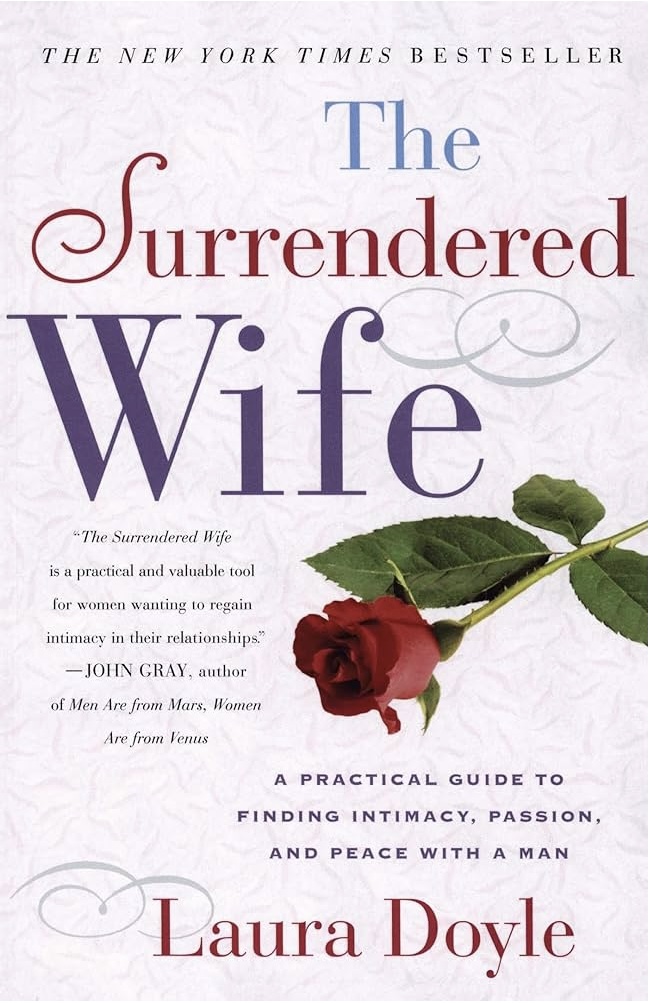
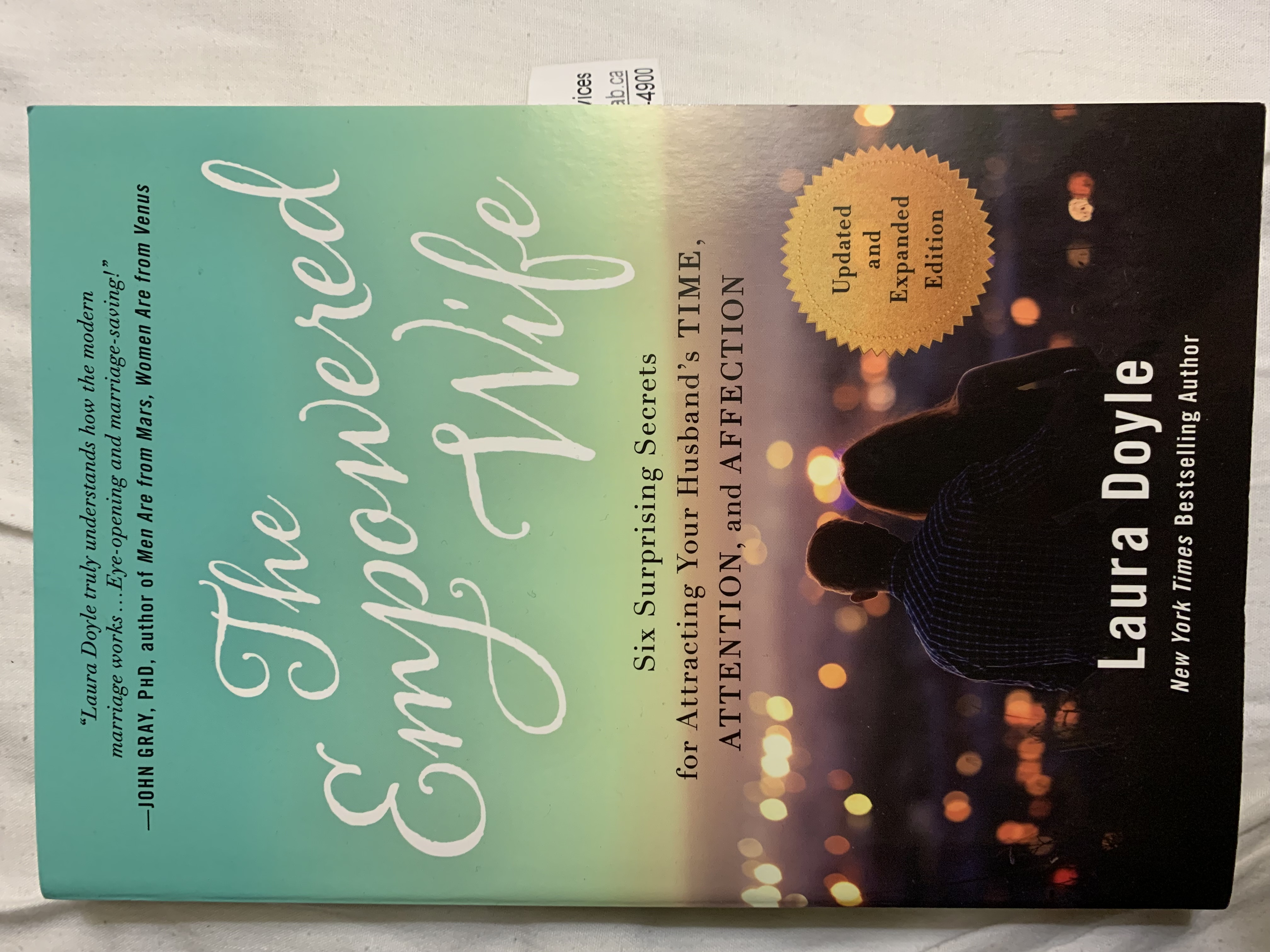
Laura Doyle: The Surrendedred Wife and The Empowered Wife.
|
|
In The Surrendered Wife she make an allowance foir divorce, which I do not agree with, but otherwise it is well worth reading. The Emnpowred Wife is basically an updated version of her earier book First Kill all the Marriage Counsellors. (Based on a line from a Shakepearian play "First Kill all the Lawyers.") Her website is: www.LauraDoyle.org
Here is an extract from The Surrendered Wife:
WHY WOULD A WOMAN SURRENDER?
When I was newly married at twenty-two, I had no idea I would ever call
myself a surrendered wife. At that time, the very phrase would have
repulsed me. I did know that marriage was risky because I had watched
my parents go through a brutal divorce. Still, I was hopeful that I
could do better. I was amazed that my husband, John, could love me as
much as he did, and part of me believed we could make our marriage work
simply because it was born of so much goodness. At first our marriage
was blissful. Then, I started to see John's imperfections more
glaringly, and I began correcting him. It was my way of helping him to
improve.
From my point of view, if he would just be more ambitious at work, more
romantic at home, and clean up after himself, everything would be fine.
I told him as much. He didn't respond well. And, it's no wonder. What I
was really trying to do was control John. The harder I pushed, the more
he resisted, and we both grew irritable and frustrated. While my
intentions were good, I was clearly on the road to marital hell. In no
time I was exhausted from trying to run my life and his. Even worse, I
was becoming estranged from the man who had once made me so happy. Our
marriage was in serious trouble and it had only been four years since
we'd taken our vows.
My loneliness was so acute I was willing to try anything to cure it. I
went to therapy, where I learned that I often used control as a
defense. I read John Gray's Men Are from Mars, Women Are from Venus,
which gave me some understanding of the different ways men and women
communicate and approach life. I talked to other women to find out what
worked in their marriages. One friend told me she let her husband
handle all of the finances, and what a relief that was for her. Another
one told me she tried never to criticize her husband, no matter how
much he seemed to deserve it. I decided I would try to follow in these
women's footsteps as an "experiment" in my marriage. I desperately
wanted to save the relationship, and I also hoped to rescue my
selfrespect, which was fading with each episode of anger and
frustration I unleashed on John. Little did I know that I was taking
the first baby steps in surrendering and that doing so would renew our
marital tranquility and my self-respect. Today I call myself a
surrendered wife because when I stopped trying to control the way John
did everything and started trusting him implicitly, I began to have the
marriage I've always dreamed of.
The same thing will happen to you if you follow the principles in this
book. None of us feels good about ourselves when we're nagging,
critical, or controlling. I certainly didn't. The tone of my voice
alone would make me cringe with self-recrimination. Through
surrendering, you will find the courage to gradually stop indulging in
these unpleasant behaviors and replace them with dignified ones. You
will also have more time and energy to focus on what's most important
to you. Whether your desire is to have a more harmonious family, run a
top corporation, or both, you'll feel increasing pride as you realize
your goals faster than ever before.
Surrendering has a way of bringing out the best in us, both as
individuals and as wives, which is why it's so worth doing. There was
no single moment when the surrendered lightbulb went off in my head.
Instead, I changed little by little. I experimented, first by keeping
my mouth shut--and sometimes even my eyes--when John drove. When we
arrived in one piece, I decided that I would always trust him behind
the wheel, no matter how strong my urge to control. Next, I stopped
buying his clothes (yes, even his underwear), even though I worried
that he wouldn't buy any for himself. (I was wrong.) I learned what not
to do from making painful mistakes, like criticizing the way he
maintained the cars, which made me feel like my mother when she was
cranky and caused John to watch TV for four straight hours, avoiding
me. I prayed for wisdom, and took more baby steps towards approaching
the relationship without control. Slowly but surely, things started to
change. As I stopped bossing him around, giving him advice, burying him
in lists of chores to do, criticizing his ideas and taking over every
situation as if he couldn't handle it, something magical happened. The
union I dreamed of appeared.
The man who wooed me was back. We were intimate again. Instead of
keeping a running list of complaints about how childish and
irresponsible he was, I felt genuine gratitude and affection for John.
We were sharing our responsibilities without blame or resentment.
Instead of bickering all the time, we were laughing together, holding
hands, dancing in the kitchen, and enjoying an electrifying closeness
that we hadn't had for years. For our ninth wedding anniversary, I
changed my last name to match my husband's. "Now that I know him a
little better, I figure I'll give it a shot," I joked to my friends.
What I really meant was that I wanted to be intimate with John in a way
that I never was before. I wanted to do something that symbolized my
tremendous respect for him, and to acknowledge outwardly an inward
shift. This was the natural development of a path I had started some
time ago without realizing it.
At first, I felt uneasy when I held my tongue instead of expressing my
opinion about everything. Restraining myself from correcting my husband
felt like trying about everything. Restraining myself from correcting
my husband felt like trying to write with my left hand. Life had become
awkward! But there were positive results. Over time, I formed new
habits. When I slipped back into my old ways, I stopped to ask myself,
"Which do I want more: to have control of every situation or to have an
intimate marriage?" Naturally, emotional connection, lack of tension,
dignity, having kindness, and being able to relax always trumped
getting the chores done or having things my way all the time. To remind
myself of my new priorities, I adopted the word "surrender" as my
mantra, because it was shorter and more to the point than saying, "stop
trying to control everything." I repeated "surrender" to myself
silently over and over again. It's about following some basic
principles that will help you change your habits and attitudes to
restore intimacy to your marriage.
It's about having a relationship that brings out the best in both of
you, and growing together as spiritual beings. Surrendering is both
gratifying and terrifying, but the results- peace, joy, and feeling
good about yourself and your marriage-are proven. The basic principles
of a surrendered wife are that she:
• Relinquishes inappropriate control of her husband
• Respects her husband's thinking
• Receives his gifts graciously and expresses gratitude for him
• Expresses what she wants
• Relies on him to handle household finances
• Focuses on her own self-care and fulfillment A surrendered wife is:
• Vulnerable where she used to be a nag
• Trusting where she used to be controlling
• Respectful where she used to be demeaning
• Grateful where she used to be dissatisfied
• Has faith where she once had doubt
A surrendered wife has abundance where she was once impoverished, and
typically has more disposableincome and more satisfying, connected sex
than she did before she surrendered. My sister, Hannah Childs, related
the philosophy of the surrendered wife to her experience as a baliroom
dance teacher. "In marriage she said, "as in ballroom dancing, one must
lead and the other must follow. This is not to say that both roles are
not equally important. It is rare that I find a woman who can resist
"backleading." *I did everything he did,' Ginger Rogers once said about
Fred Astaire. "And I did it backwards, and in high heels." Although
Fred and Ginger were equally skilled and talented dancers, if they had
both tried to lead (or follow), they would have been pulling each other
in opposite directions. Quite simply, they would not be in sync, but
rather would be tripping over each other and eventually pulling apart.
Instead, Ginger let Fred lead her, trusting that he was making her look
good and keeping her from harm. Instead of Fred diminishing her, Ginger
allowed him to be the foil for her talent. I want my husband to bring
out my very best, too.
Just as fish are always the last to discover they are in the ocean,
those of us who survive by trying to control things around us are often
the last to recognize our behavior. We tell ourselves that we are
trying to instruct, improve, help others, or do things
efficiently--never that we are so afraid of the unpredictable that we
do
everything in our power to ensure a certain outcome. For instance, I
thought I was merely making helpful suggestions when I told my husband
that he should ask for a raise. When I urgently exclaimed that we
should have turned right instead of left while riding in a friend's car
who knew perfectly well how to get to our destination, I reasoned that
I was trying to save time and avoid traffic. When I tried to convince
my brother that he really should get some therapy, I justified butting
into his life as wanting "to be there for him." All of these
justifications were merely elaborate covers for my inability to trust
others. If I had trusted that my husband was earning as much money as
he could, I wouldn't have emasculated him by implying that I found him
lacking ambition. If I had trusted my friend to get us to our
destination in a reasonable time, I wouldn't have barked out orders
about where to turn, leaving a cold frost on the inside of the car. If
I had trusted my brother to make his own way in the world, he would've
felt more inclined to continue to share the emotional milestones of his
life with me. Trusting is magical because people tend to live up to our
expectations. If you make it clear to your husband that you expect him
to screw up at work, wreck the car, or neglect his health, you are
setting a negative expectation. If on the car, or neglect his health,
you are setting a negative expectation. If on the other hand, you
expect him to succeed, he is much more likely to do just that. To trust
someone means you put your full confidence in them, the way Robert
Redford's character in the movie The Horse Whisperer trusted a teenager
behind the wheel of his truck for the first time--by resting in the
passenger seat with his hat over his eyes. Trusting someone means you
anticipate the best outcome--not the worst--when he's in charge. When
you trust, you don't need to doublecheck, make back-up plans or be
vigilant because you're not expecting any danger. You can sleep with
both eyes shut, knowing that everything's going to be fine. It bears
repeating:
When you trust, you are anticipating the best outcome. Those of us who
have trouble trusting others when every rational indicator says that we
are safe are reacting to our own fear. We may be afraid that we won't
get what we need, or that we'll get it too late. We may fear that we'll
spend too much money, or have to do extra work. It could be, and often
is, that we fear loneliness, boredom, or discomfort. If you are like me
and find yourself driven to correct, criticize, and conquer a partner,
then you are reacting to your fears. Whatever the situation, if you do
not react to your fear of the outcome, you don't need to try to
dominate, manipulate, or control it. As it turns out, my fears were a
conditioned response I had developed over the years to hide my own
vulnerability- the soft underbelly that exposes me to both the greatest
pain and the greatest pleasure. I hid my softness as much as I could
because I believed it was unattractive. Ironically, the people I found
most endearing and easiest to connect with had the ability to expose
their real fears, joys, guilt, needs, and sadness. I was drawn to their
openness and warmth. I found them engaging. When I was choosing to
control over allowing myself to be vulnerable, I was doing so at the
expense of intimacy. What I know now is that control and intimacy are
opposites. If I want one, I can't have the other. Without being
vulnerable, I can't have intimacy. Without intimacy, there can be no
romance or emotional connection. When I am vulnerable with my husband,
the intimacy, passion, and devotion seem to flow naturally. Today I try
to relinquish control as much as I can and allow myself to be
vulnerable. Unfortunately, I still don't do this perfectly, but it
doesn't seem to matter. Just making intimacy my priority--rather than
control--by practicing the principles described in this book, has
transformed my marriage into a passionate, romantic union.